
Table of Contents
Start WZ25E work planning with the repair sequence
A park or utility maintenance team often needs to open a short section, move the excavated material, bring in replacement material and restore the surface. WZ25E work planning should describe that sequence before comparing equipment. One electric backhoe loader may serve several stages, but each stage needs a suitable working position and equipment envelope. The advantage of combining functions depends on how often the operator must reposition, change tools or wait for another crew.
Use a real recurring repair as the reference job. Record the excavation dimensions, spoil location, material receiving point and access restrictions. Separate the work the machine must perform from work assigned to other equipment or people. The WZ25E product page supplies several useful dimensions and ratings, while some labels need clarification. A sound selection enquiry makes those unresolved details visible instead of treating every listed number as an approved operating limit.
Separate the two functions in WZ25E work planning
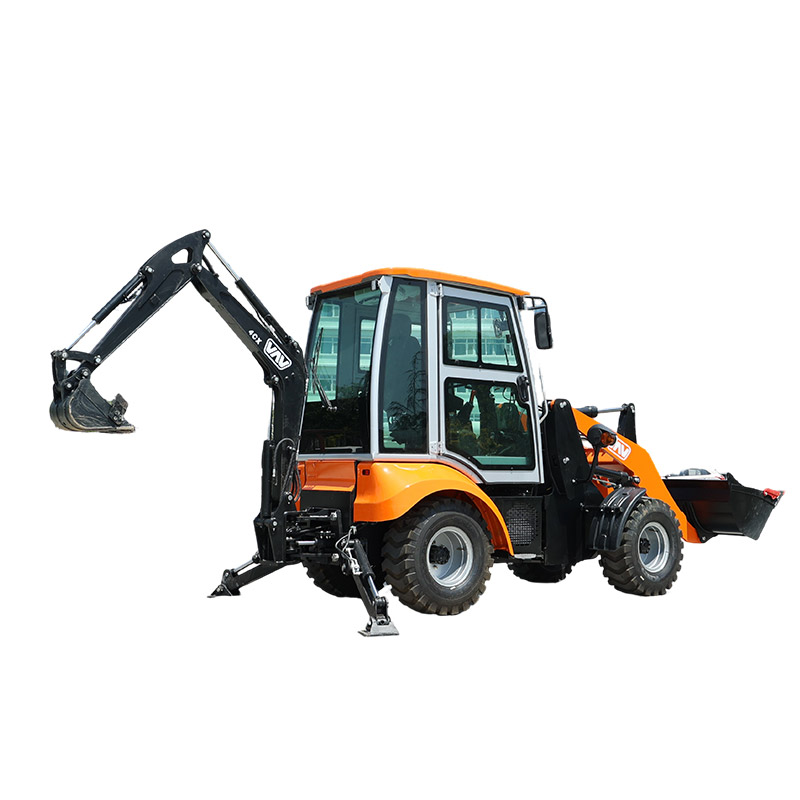
For WZ25E work planning, draw the front loading task separately from the excavation task. The front operation includes collecting material, carrying it along the permitted route and discharging it at a receiving point. The rear operation involves a standing position, an excavation shape and a spoil-placement area. Capacity or clearance that appears suitable for one function does not establish suitability for the other.
Map the transitions in WZ25E work planning between the two operations. If the loader must repeatedly leave the excavation area to move spoil, record that movement as part of the job rather than counting only productive bucket cycles. A separate spoil vehicle or a different material staging arrangement may improve the overall sequence. Compare the complete repair time and required resources, including inspection and setup, before assuming that one multi-purpose machine always removes the need for supporting equipment.
Use the published WZ25E values with their original labels
The published WZ25E table lists 4,200 kg operating weight, 1,000 kg rated load, a lithium-battery specification of 153.6 V and 206 Ah, and dimensions written as 5,600 × 1,950 × 2,750. The dimension row does not include a visible unit in the captured table. The bucket row gives 0.45 flat bucket and 0.6 full bucket without a unit. WZ25E work planning therefore needs a dated drawing and a clear definition of the bucket-volume measurement basis.
Two discharge-related rows also need attention. One is labelled Dumping height with a value of 3300 and no stated unit, while another says Dumping Height at 2635 mm. The table does not clearly assign those two values to the front and rear mechanisms. Likewise, a row labelled Loader Digging Depth gives 2360 mm. Ask MINGYU to identify the relevant mechanism and measurement points. Do not relabel these values yourself simply because one interpretation seems mechanically plausible.
| Captured parameter | Published value | Confirmation needed |
|---|---|---|
| Rated load | 1,000 kg | Applicable mechanism and configuration |
| Operating weight | 4,200 kg | Included supplied equipment |
| Battery capacity | 153.6 V / 206 Ah | Actual battery and charger identities |
| Bucket capacity | 0.45 flat / 0.6 full | Unit and measurement basis |
| Dumping height, first row | 3300, unit not shown | Mechanism, unit and reference points |
| Dumping height, second row | 2,635 mm | Mechanism and discharge geometry |
| Loader digging depth | 2,360 mm | Correct mechanism and working-envelope drawing |
Check material mass before planning the front bucket cycles
WZ25E work planning should use the actual material condition. Soil, aggregates and replacement fill can change in density and moisture. Obtain a representative mass or bulk-density measurement and confirm the supplied bucket volume before calculating a batch. A visual impression of a full bucket cannot establish material mass, and the published rated load still needs its applicable configuration and conditions.
For a WZ25E work planning illustration only, suppose the supplier confirms a working material volume of 0.45 m³ and a measured material density is 1,600 kg/m³. Their product is 720 kg before considering whether that volume and material are suitable for the approved operation. Those inputs are hypothetical and do not establish a WZ25E payload. If a different material produces an excessive result, revise the approved loading method or select another configuration. Do not rely on the apparent spare space in the bucket.
Draw the excavation for WZ25E work planning
The excavation sketch should show length, width, depth, nearby structures and the place where spoil will be deposited. WZ25E work planning must connect that sketch with the manufacturer-confirmed working envelope. Maximum digging height is listed at 3,665 mm, but that single boundary does not describe the reach available at the required depth or the space needed to move the rear equipment.
Include the standing area and any configuration-dependent setup requirements. Have the site team assess the excavation, underground services and surrounding ground through the appropriate local process. Request the operating instructions and envelope drawing for the exact quoted equipment. A machine's ability to reach a point geometrically does not establish a safe excavation or a suitable ground position. Keep these assessments together in the job file while retaining their distinct purposes.
Plan access for setup as well as travel
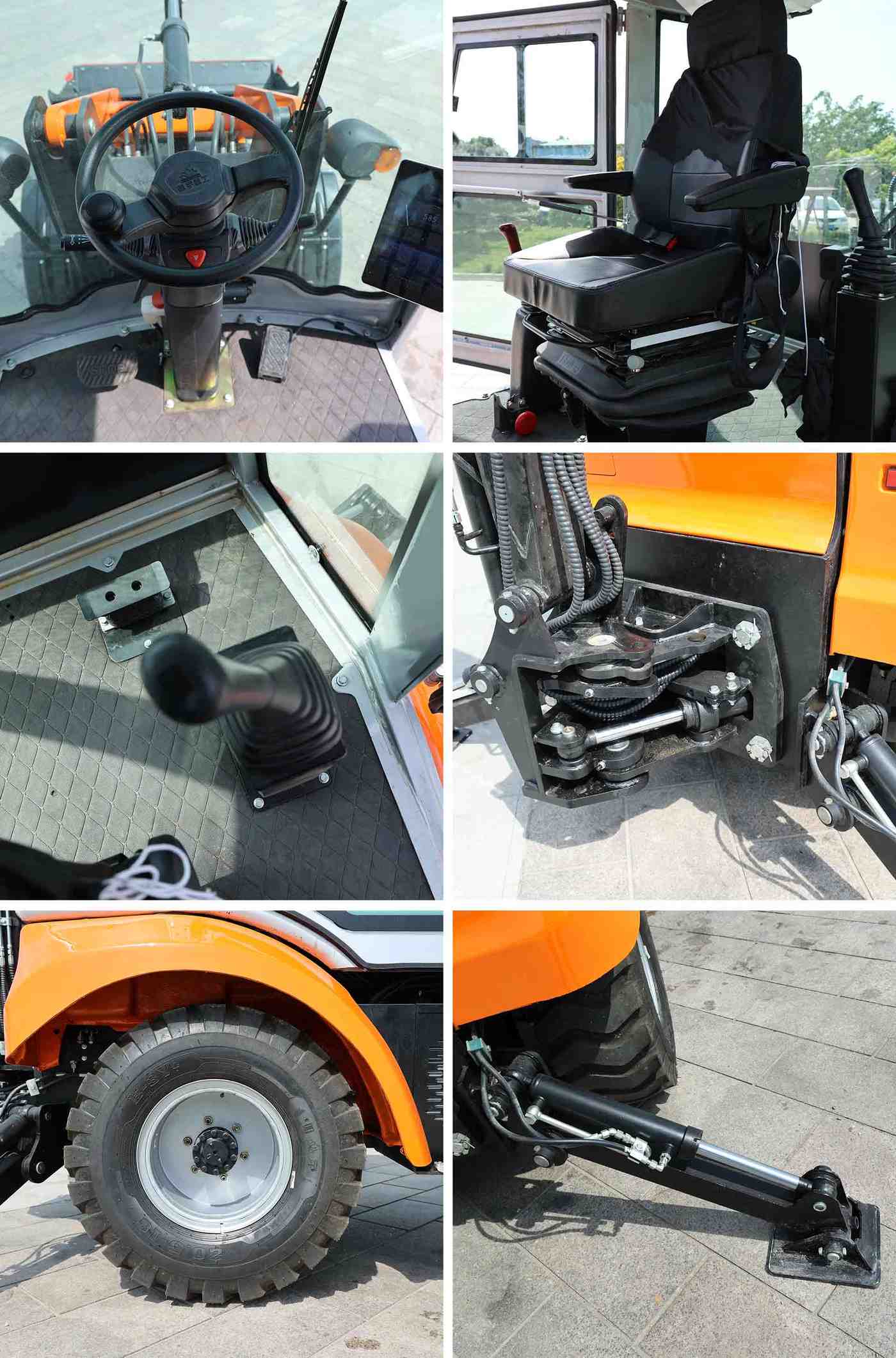
A compact approach route can lead to a work area that lacks room for deployment or material storage. WZ25E work planning should show the machine's travelling envelope, the work envelope and the movements needed to leave the site. Confirm the units and attachment condition for the published dimensions before using them in a route assessment. Include overhead branches, gates, parked vehicles, drains and public access where relevant.
Measure storage and receiving areas at the same time. If spoil, replacement fill or removed surface material occupies the machine's setup space, the repair sequence can become impossible even though the initial access route was clear. Assign a location and an owner for every temporary material stock. Where pedestrian access or other work changes during the day, make the necessary route-control arrangements part of the operating plan rather than an informal assumption.
Build charging into WZ25E work planning
The listed 153.6 V and 206 Ah values give nominal nameplate energy of 153.6 × 206 ÷ 1,000 = 31.6416 kWh. WZ25E work planning must not turn that arithmetic into a runtime promise. The usable battery energy, reserve and charging restrictions require confirmation for the supplied battery system. Loading, excavation, travel and waiting can produce different patterns of demand.
Record how much time the reference repair spends in each mode and when the machine can reach the charger. Ask for charger input, phase, frequency, connection and installation requirements, then have the site supply checked by a qualified electrician. A scheduled break is useful only if the permitted charging practice and the actual site arrangement support it. Include a plan for finishing or safely suspending a job when the next charging opportunity is delayed.
Measure a complete repair rather than one fast cycle
A demonstration for WZ25E work planning should reproduce the normal sequence: preparation, excavation, spoil management, loading or replacement-material movement and departure. Have competent personnel agree the test method and operating arrangements. Record attachment changes, repositioning and ordinary waiting separately. This shows whether a multi-purpose configuration is useful for the team's real work rather than only attractive during an unrestricted demonstration.
For an illustrative WZ25E work planning quantity check, a repair excavation 8 m long, 0.5 m wide and 0.8 m deep contains 3.2 m³ in situ. That calculation excludes overbreak and material expansion after excavation. It does not predict the WZ25E cycle count or completion time. Compare the geometric quantity with measured work and the permitted task. Retain the conditions with the results so later productivity and energy estimates refer to the same kind of repair.
Compare one multi-purpose machine with split resources
WZ25E work planning becomes more useful when the team compares alternative work arrangements. One machine may reduce transport or fleet requirements, but it can only perform one task at a time. Separate machines may allow excavation and material movement to overlap, while introducing their own transport, staffing and site-space needs. Compare the actual resource sequence and work calendar rather than assuming either arrangement is always more efficient.
Use the WZ25E work planning table as a discussion framework, with local measured inputs added later. Any cost comparison should include mobilisation, productive time, setup, energy, attachments and maintenance support on a common basis. If the intended job volume is uncertain, test lower utilisation as well as the expected workload. A configuration that fits recurring park repairs may still be unsuitable for an occasional deeper or more demanding utility excavation.
| Planning question | One WZ25E configuration | Separate equipment |
|---|---|---|
| Task overlap | Loading and excavation must be sequenced | Overlap may be possible if site and staffing permit |
| Mobilisation | Confirm one-machine transport and attachment package | Assess each machine and delivery |
| Space at the repair | Allow both work envelopes over time | Allow simultaneous equipment and traffic |
| Energy or fuel | Measure the actual electric duty cycle | Measure each resource on the same work basis |
| Decision evidence | Complete repair trial and confirmed configuration | Equivalent complete-task comparison |
Finish WZ25E work planning with a clear supply record
Request a quotation that resolves the table-label questions and identifies the exact bucket, rear equipment, battery and charger. Supply the repair sketch, materials, access layout, shift pattern, electrical supply and destination. Ask for the relevant operating documentation, packing drawing, spare-part identification and support arrangements. WZ25E work planning should end with a configuration that the operations team can recognise and assess, rather than a model name attached to an incomplete list of assumptions.
At handover, compare the machine and supplied documents with that record. Retain initial condition photographs and the commissioning results. Assign responsibility for inspection, charging and reporting a fault. If the attachment, work depth, material or route changes, reopen the relevant parts of the assessment. This keeps later jobs tied to the confirmed equipment and instructions while giving MINGYU useful information when further selection or technical support is needed.
Explore the WZ25E backhoe loader specifications, the backhoe loader range and MINGYU service and support. For wider workplace planning, refer to the relevant official guidance alongside the machine instructions and applicable local requirements.
Send MINGYU your recurring repair sketch, material information, access layout, charging supply and destination. Request a WZ25E configuration quotation that clarifies the published dimension and digging labels and includes the relevant operating and charging documents.
Frequently asked questions
What should WZ25E work planning cover first?
Start with the complete repair sequence and separate the front loading task from the rear excavation. Record material, receiving geometry, excavation shape, setup area, access and charging opportunities before comparing equipment.
Which WZ25E dumping height should be used?
The captured page has two dumping-height rows with different values and incomplete mechanism labels. Ask MINGYU for the relevant drawing, units and reference points rather than assigning one value to a mechanism yourself.
Does the battery specification establish runtime?
No. The 153.6 V/206 Ah figures give 31.6416 kWh nominal nameplate energy. Usable energy, charging restrictions and representative consumption must be confirmed before estimating a working period.
Can the listed digging-depth row be treated as a rear operating limit?
The captured label says Loader Digging Depth at 2,360 mm. Its intended mechanism needs confirmation. Use the configuration-specific operating information and working-envelope drawing for the proposed excavation.
When is a combined machine worth considering?
WZ25E work planning should compare recurring jobs, task sequencing, mobilisation and support requirements with split resources. A complete-task trial and common cost scope provide better evidence than isolated fast bucket cycles.