
Table of Contents
Begin WE10 trench planning at the property boundary
A garden trench project can fail at the gate before digging begins. The access opening may be narrower than the approach, a covered passage may limit height, or there may be nowhere to place spoil once the machine is inside. WE10 trench planning should connect access, the excavation position and material removal as one sequence. The captured product specification lists an 870 mm overall width and 1,770 mm maximum digging depth, but those two values cannot establish that a particular garden job is feasible.
The purpose of WE10 trench planning is to decide what information must be resolved before a machine is ordered or mobilised. This article does not design a trench, approve ground conditions or establish an excavation support system. It provides a buyer's framework for discussing a proposed garden application using the model's captured dimensions and specifications.
Measure the complete route rather than the gate alone
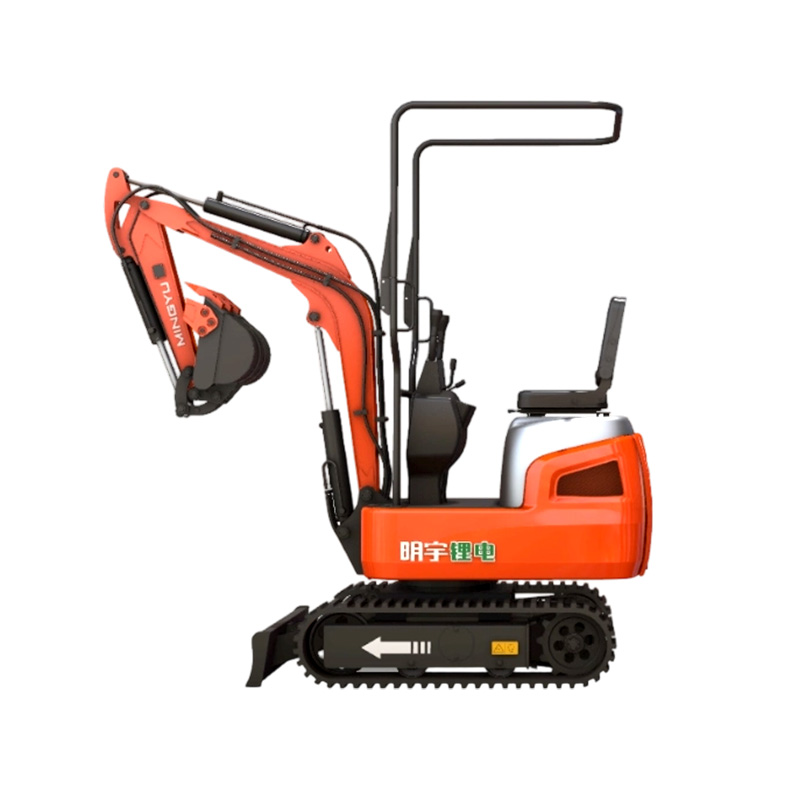
The WE10 dimensions are listed as 2,715 × 870 × 2,263 mm. Ask the supplier to confirm the measurement basis and the transport configuration. Check the full route for corners, steps, overhead structures and objects that intrude at different heights. WE10 trench planning needs the fitted attachment and relevant moving envelope, rather than a width comparison based only on the tracks.
Record measurements at the narrowest points, including hinges, drainpipes and the approach to a turn. Photograph each restriction with a scale reference. For WE10, also identify where someone could stand to supervise the movement without entering a hazardous area. If a structure must be altered for access, obtain the necessary agreement and assess the revised route before arranging delivery.
Excavation envelopes in WE10 trench planning
A maximum digging depth of 1,770 mm is a geometric specification, not a complete trench profile. The depth available at a particular offset, the required bottom width and the ability to work around an obstruction depend on the actual machine geometry and attachment. Ask for the relevant working-range drawing. WE10 trench planning should show the proposed standing position and the trench relative to it, with measurement references clearly identified.
Use WE10 to clarify whether excavation can proceed from one position or requires successive moves. Show where the machine will stand after each move and whether the route remains available. Request confirmation of the relevant reach and dump geometry, because the captured WE10 table does not supply those dimensions. A supplier response should address the proposed layout rather than simply repeat the depth figure.
Keep ground and buried-service decisions with the project team
A compact electric machine can still damage a buried service or overload an unsuitable surface. The listed gross weight is 890 kg, and the table gives a 690 mm track gauge. Neither figure approves a suspended slab, a covered drain or ground next to an excavation. WE10 trench planning should identify which surfaces and hidden structures require assessment and what machine loading information the assessor needs.
The specification also lists 30° climbing ability. Do not use that catalogue entry as a permitted working slope, a cross-slope limit or permission to approach an excavation edge. In WE10, ask for the supplied instructions relevant to travel and working positions, then have the site assessed for those conditions. Travel ability and an approved place to excavate are different questions.
WE10 trench planning and the spoil-volume calculation
Even a short trench creates material that must go somewhere. For a deliberately hypothetical rectangular trench 12 m long, 0.30 m wide and 0.60 m deep, the geometric in-place volume is 12 × 0.30 × 0.60 = 2.16 m³. That excludes changes in volume after excavation, irregular geometry and additional digging. WE10 trench planning should use the actual design and a project-specific disposal plan rather than treating that illustrative figure as a quotation quantity.
Identify whether spoil will be retained for backfill, separated by type or removed from the property. Show storage and container positions on the WE10 sketch. Keep their effect on access and excavation edges within the site assessment. If every bucket must be transferred into another vehicle, that receiving arrangement may determine progress more strongly than the excavator's headline bucket volume.
| Proposed spoil arrangement | Potential benefit to investigate | Constraint to resolve |
|---|---|---|
| Retain material on site | Material available for planned backfill | Suitable storage position, access and edge assessment |
| Load a separate site carrier | Moves spoil beyond excavator reach | Carrier access, receiving geometry and handoff sequence |
| Place into a removal container | Defined destination for disposal | Container location and available dump geometry |
| Stage removal in batches | Accommodates limited garden space | Clear stop points and continued entry/exit access |
Ask for the bucket and attachment needed by the design
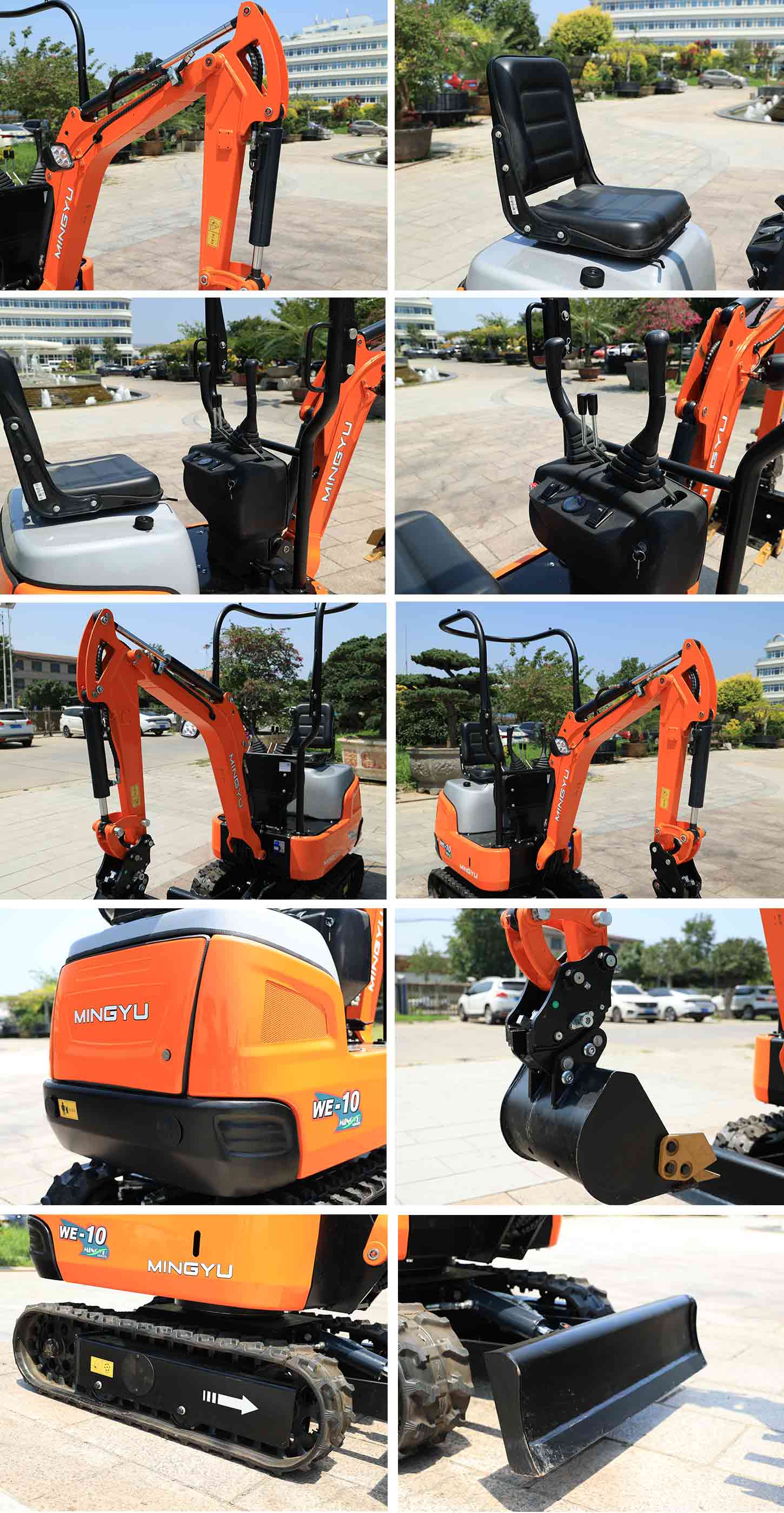
The 0.025 m³ bucket description does not state the bucket width, tooth arrangement or suitability for a particular trench. Obtain those details and the relevant attachment instructions. WE10 trench planning should not assume that a bucket shown in a product image creates the design width in one pass. Roots, existing foundations and other constraints also affect the proposed method and need appropriate assessment.
Consider the exit condition of the trench as well as the digging stage. The project may require separate means for backfill placement and compaction, selected through the project plan. WE10 trench planning should show which work the excavator package is expected to perform and which equipment or process handles the remaining stages. This prevents a purchase request from assigning unsupported functions to the machine.
WE10 trench planning for battery charging logistics
The captured battery entry reads 76.8 V/105 Ah, 8 kWh, with rated power listed at 6.2 kW. Multiplying the voltage and ampere-hours gives 8.064 kWh, consistent with a rounded nominal energy description. Neither that arithmetic nor the motor rating establishes runtime. WE10 trench planning needs the proposed digging pattern, travel, waiting and charging opportunities so the supplier can discuss the actual package.
WE10 trench planning should also identify where the machine will be parked between work periods and how that parking affects access. Ask about storage and charging conditions relevant to the site's environment. Avoid promising a full day from the nominal battery figure. A suitably planned demonstration or supplier duty-cycle assessment can investigate the actual requirement without turning a marketing number into a schedule guarantee.
Turn the site sketch into a useful WE10 enquiry
Package the route measurements, trench drawing, proposed standing positions, spoil plan and charging information into one enquiry. Mark which dimensions are measured and which are provisional. Ask MINGYU for the WE10 transport and working-range drawings, exact bucket details and the battery/charger specification. WE10 trench planning is more efficient when the supplier can see the complete route from arrival to spoil removal rather than receive isolated questions about width and depth.
Finally, identify delivery access, unloading arrangements, documents and operator familiarisation in the order. Resolve differences between the quoted configuration and the supplied machine before normal work. The outcome of WE10 trench planning should be a clear equipment scope and a project team that knows which site decisions remain theirs, supported by relevant machine information.
Explore the WE10 excavator specifications, the phạm vi máy xúc and MINGYU service and support. For wider workplace planning, refer to the relevant official guidance alongside the machine instructions and applicable local requirements.
Send MINGYU a measured garden-access sketch, trench profile and spoil-removal plan for a WE10 trench planning enquiry. Request the relevant working-range drawing, bucket dimensions and charger requirements so the equipment proposal can be reviewed with the project team.
Những câu hỏi thường gặp
Does WE10 trench planning start with the 1,770 mm depth rating?
Start with the route and trench design. Maximum depth is one geometric parameter; the required offset, standing position, bucket and site conditions still need review.
Is a 950 mm gate sufficient for an 870 mm-wide WE10?
Those figures leave only 80 mm total nominal difference. They do not establish adequate clearance. Confirm the actual travelling envelope and assess the gate, approach and site controls.
How many buckets will a garden trench require?
Geometric volume divided by nominal bucket capacity gives only an illustrative volume ratio. WE10 trench planning must account for actual soil, fill, trimming and spoil transfers before estimating work.
Can the battery rating establish an eight-hour shift?
No. The captured 76.8 V/105 Ah, 8 kWh entry describes nominal battery specifications. Request a duty-cycle assessment and charger information for the proposed operation.
What drawings help WE10 trench planning?
Provide the access route, trench profile, standing positions, nearby structures and spoil destination. Request transport, working-range and bucket drawings for the quoted machine.