
Table of Contents
Start 936Z truck loading analysis with the order size
An aggregate merchant may load small customer orders throughout the day rather than fill the same haul truck repeatedly. The equipment decision then depends on how material is measured, how vehicles queue and how accurately each order can be completed. For 936Z truck loading, the first useful question is the range of dispatch quantities and receiving vehicles.
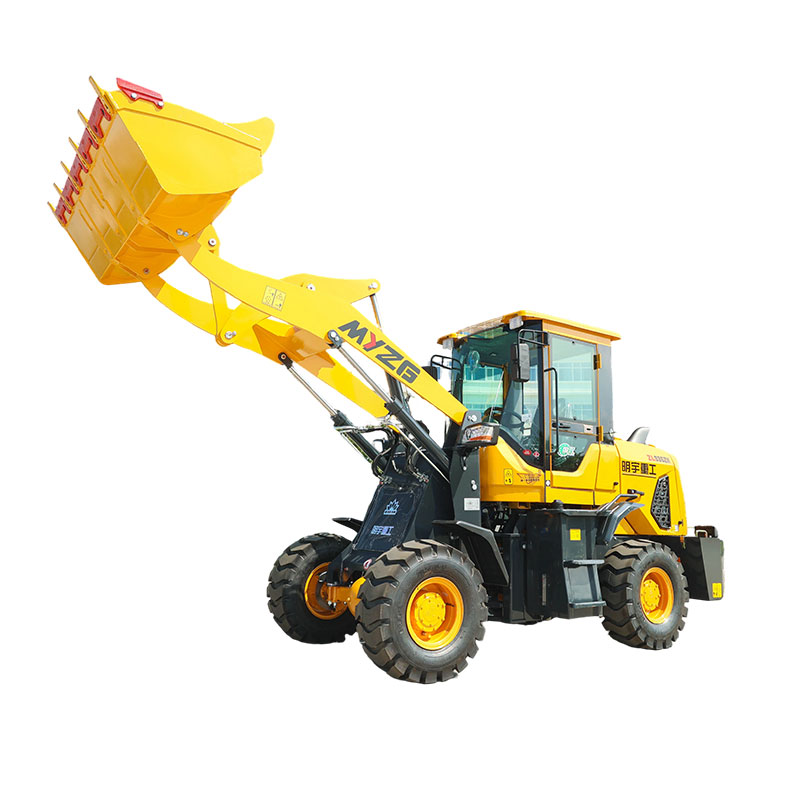
The product page lists the 936Z wheel loader with 1,600 kg rated load, a 0.65 m³ bucket and 3,200 mm dumping height. These values help frame 936Z truck loading enquiries, but they are not a production guarantee or a truck-compatibility approval. The buyer needs to connect material properties, bucket selection and actual vehicle geometry.
Give every stocked material its own loading basis
For 936Z truck loading, collect the bulk-density information relevant to each supplied material and the condition in which it is handled. Do not borrow one density for every sand, stone or loose fill in the yard. Moisture, grading and contamination can change the material actually presented to the loader. Ask the material supplier or responsible technical team for an appropriate basis, and decide how the operation will recognise a change that invalidates it.
A simple calculation illustrates the issue: 0.65 m³ multiplied by a hypothetical bulk density of 1,200 kg/m³ gives 780 kg; the same volume at a hypothetical 2,000 kg/m³ gives 1,300 kg. These are arithmetic examples, not measured materials or permitted loads. For 936Z, actual bucket fill and the machine's applicable limits still need confirmation.
Separate sale quantity from bucket capacity
A 0.65 m³ bucket does not automatically deliver 0.65 m³ into every customer's vehicle. The capacity description, loading technique, material and retained residue affect what is moved. In 936Z truck loading planning, ask whether sales are measured by mass, volume or another agreed method and how the quantity will be verified.
Small orders may require a partial final load, while larger orders may require several passes and a check before dispatch. For 936Z, record the accepted measuring method and who decides when the order is complete. If a weighing system is proposed, ask about its scope, suitability and requirements in the destination market. Do not imply that a loader attachment or display is approved for trade measurement without the relevant evidence.
Confirm dump geometry for 936Z truck loading
The published dumping height is an important starting point for 936Z truck loading, but its measurement reference must be confirmed. Ask for the bucket-at-dump drawing, including the forward position and relevant clearance. The top edge of a receiving body is only one part of the geometry.
List the receiving vehicles used for 936Z and provide their loading-body drawings or measured dimensions. Include the highest edge, the opening width and the position where material needs to land. Consider whether the loader can approach from the required side without conflicting with another vehicle. A yard serving many customer vehicle types needs a defined acceptance process; it cannot treat every arriving body as compatible with the same catalogue dumping-height figure.
Draw a complete loading circuit before estimating output
A useful 936Z truck loading layout shows the stockpile face, receiving vehicle, loader approach and withdrawal, customer waiting position and pedestrian arrangements. Mark the distance between the material and the truck, but also note turns, visibility restrictions and stops. The goal is to describe the actual circuit so a supplier demonstration can test the relevant arrangement and the site team can plan its traffic management.
For 936Z, the product's listed dimensions of 5,650 × 1,940 × 2,720 mm and 3,660 kg operating weight provide context. They do not supply a loaded swept path or a permitted surface loading. Ask for configuration drawings and the information needed by the responsible site assessor. Reserve space for the working bucket and the load, and confirm the actual travel and working envelope rather than fitting only the bare outline into a plan.

Compare 936Z truck loading priorities in a decision table
The best 936Z truck loading enquiry identifies the bottleneck the buyer wants to remove. The illustrative table below helps separate these situations. It does not promise an improvement or establish a tested output.
A disciplined 936Z truck loading comparison keeps the material, receiving vehicle and measuring method consistent between demonstrations. Otherwise a favourable result may reflect a lighter material or an easier truck rather than a better equipment match. Record the starting and finishing conditions for each observation. Keep the result associated with its particular configuration, operator and site arrangement, and avoid presenting one observed cycle as a universal hourly capacity.
| Observed yard problem | What to examine | Evidence for the purchase review |
|---|---|---|
| Many small orders need correction | Measuring method and final partial load | Order completion observations with the agreed measurement |
| Truck body is difficult to reach | Dump geometry and approach position | Measured body drawing and supplier configuration review |
| Loader waits while customers queue | Weighing, payment and vehicle release | A complete dispatch sequence rather than bucket time alone |
| Long return travel dominates | Stockpile and loading-bay locations | Site layout with route distances and interruptions |
Account for material separation and clean-up work
When a yard stocks several products, 936Z truck loading includes the work between orders. Residue in the bucket or material carried across a shared pad can affect product separation. Ask the operations team how a change from one material to another will be managed and what condition the customer expects. The equipment proposal should describe the bucket and any relevant options, while the yard establishes a practical clean-up and material-identification process.
Do not evaluate 936Z truck loading only with the easiest free-flowing stockpile. Include representative conditions within the machine's approved use, and record material retained after discharge where it affects the job. Sticky material and contamination need their own review rather than a claim that one bucket suits everything. If the supplier proposes another bucket, reassess its geometry, permitted loading and receiving-body clearance instead of carrying across conclusions from the original equipment.
Specify a useful 936Z truck loading trial
A 936Z truck loading trial should answer several concrete questions: does the approved bucket suit the material, can the receiving body be approached, and can the order be completed using the yard's measuring process? Agree a suitable trial arrangement with the responsible parties. Record the supplied machine and bucket, material condition, receiving vehicle and route. Include waiting and clean-up where they form part of ordinary work, rather than observing only the moment material falls from the bucket.
Use 936Z truck loading observations to identify constraints, not to manufacture a guaranteed rate. The current source does not state cycle time, fuel consumption or hourly output, so those values should remain open until relevant evidence is provided. If the buyer needs a performance commitment, define the conditions and acceptance method in the commercial discussion. A quotation should distinguish published machine specifications from any separately agreed, documented performance requirement.
Check the configuration behind the commercial offer
For 936Z truck loading procurement, the equipment description should identify the bucket, tyres, engine and supplied documentation. The captured page names a QUANCHAI 490 engine and 20.5-16 tyres. Its gearbox-type row reads Gear driven hydraulic pump, a description that requires clarification if the buyer needs transmission details. Ask for the current drivetrain specification rather than treating that row as a complete explanation of the transmission or operating controls.
The 936Z truck loading package also needs a clear support scope. Request maintenance instructions, parts identification, documentation language and the process for obtaining technical help. Confirm transport dimensions and actual shipment mass with the selected equipment. Destination requirements, delivery terms and quotation validity belong in the offer. Do not fill missing information with assumed warranty periods, emissions classifications or availability promises; ask MINGYU to state the relevant terms for the actual order.
Define the boundary of the yard's loading service
Keep the receiving-body requirements, measurement process and equipment configuration available to the loading team. A customer asking for an extra quantity may change more than the sales ticket; the receiving vehicle's suitability and loading limits remain separate matters that the responsible parties must resolve.
Before approving 936Z truck loading as the selected workflow, close the outstanding questions in the purchase record. Include bucket compatibility, applicable load information, dump geometry, route assessment and the agreed trial findings. Record any excluded task clearly, such as a receiving body whose geometry has not been established. This gives the yard manager a useful operating boundary and gives purchasing a defensible reason for choosing the machine beyond its headline bucket volume.
Explore the 936Z wheel loader specifications, the wheel loader range and MINGYU service and support. For wider workplace planning, refer to the relevant official guidance alongside the machine instructions and applicable local requirements.
Send MINGYU your 936Z truck loading requirements with material information, order sizes, receiving-vehicle drawings and a yard layout. Ask for a bucket proposal, verified dump geometry and a quotation based on the complete dispatch workflow.
Frequently asked questions
Does a 0.65 m³ bucket always carry the same mass?
No. For 936Z truck loading, mass depends on the material and fill. Use appropriate bulk-density information and the applicable loading limits; illustrative volume calculations are not operating permissions.
Does 3,200 mm dumping height prove truck compatibility?
It does not. For 936Z truck loading, confirm the height reference, bucket position, forward clearance, receiving-body geometry and approach layout with the supplier.
Can output be calculated from bucket volume alone?
No. In 936Z truck loading, travel, turning, interruptions, partial final loads, measurement and material condition affect the task. The captured specification gives no verified hourly output or cycle time.
What should a 936Z truck loading trial record?
Record machine and bucket identity, material condition, receiving vehicle, route, measuring method and the complete dispatch sequence. Keep observations tied to those conditions.
What information is needed for a loading-focused quotation?
Send the stocked materials, relevant density basis, order sizes, receiving-body drawings, yard layout and destination. Request equipment scope, current technical drawings and applicable instructions.