
Índice
Start with the material leaving the yard
A small aggregate merchant may need one machine to replenish stock bays, fill delivery vehicles and tidy spilled material between orders. These jobs put different demands on a 948F yard loader. The correct starting point is the load being sold and where it must finish, rather than a single engine or bucket number. Record your main materials, their supplied condition, the usual order size and the receiving vehicles. A loader that suits loose topsoil may need a different bucket-loading approach when the next customer orders wet aggregate.
The published 948F yard loader figures are 2,000 kg rated load, 1 m³ rated bucket capacity and 3,500 mm dumping height. This guide connects those separate specifications to materials, receiving vehicles and site constraints so an owner can request a relevant configuration rather than a generic equipment price.
Read the 948F yard loader specifications as separate constraints
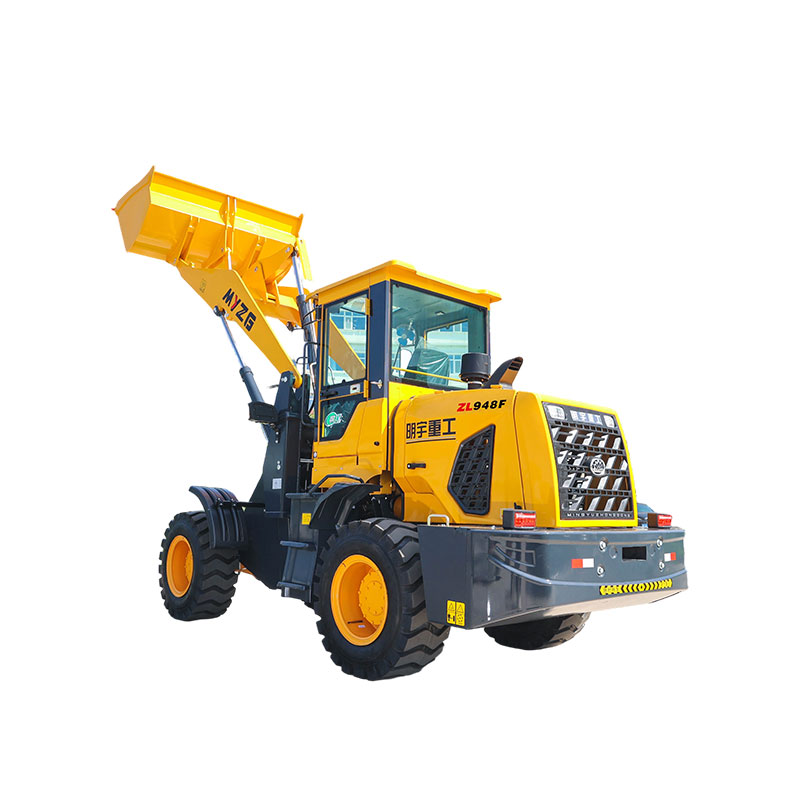
The product heading identifies the machine as 948F, while the specification table uses ZL948FM as the wheel loader model. Put both references in the enquiry and ask which designation will appear on the quotation and machine plate. The page lists a 2.15 m bucket width, 5,480 kg operating weight and overall dimensions of 6,515 × 2,190 × 2,845 mm. Those values are useful for a first site review, provided the supplier confirms the configuration and measurement basis.
Preserve the original parameter labels when comparing the 948F. Turning radius is not aisle width, dumping height does not establish truck compatibility, and bucket volume does not define permitted material mass. Ask the supplier to resolve each relevant constraint against your actual task.
| Decision | Published 948F information | Evidence the buyer still needs |
|---|---|---|
| Material carried per pass | 2,000 kg rated load; 1 m³ bucket | Material density and approved payload conditions |
| Receiving vehicle access | 3,500 mm dumping height; 900 mm distance | Body profile and full bucket movement review |
| Stock-bay access | 2.15 m bucket width | Bay opening, usable pile face and clearance |
| Yard manoeuvring | 2,775 mm minimum turning radius | Swept-path review with the actual attachment |
| Route assessment | 5,480 kg operating weight | Surface and structure suitability assessment |
Convert bucket volume into a material question
The same bucket volume can represent substantially different mass when the material changes. For an explicitly hypothetical example, 1.0 m³ of loose material at an assumed bulk density of 1,300 kg/m³ has a calculated mass of 1,300 kg. At an assumed 1,900 kg/m³, the same geometric volume represents 1,900 kg. These examples are arithmetic illustrations, not measured densities for your sand, stone or soil and not an approval to carry either load on a 948F yard loader.
Obtain relevant density information and describe moisture and stockpile condition. Heaped, compacted and level quantities are different. Ask how the 948F bucket rating and load rating apply to the supplied configuration. Use appropriate weighing arrangements for customer sales rather than estimating mass from the bucket's appearance.
Choose a bucket around the stock-bay face
A bucket must enter the usable part of the pile without striking bay walls, posts or stored equipment. Measure the clear opening at the narrowest point, including protective barriers and any inward-projecting fittings. The listed 2.15 m bucket width is a starting dimension for the 948F yard loader, but the machine still needs working clearance and room to withdraw. A nominally wide bay may have a much smaller usable face when material is piled against a wall or adjacent bins are full.
Describe loose stock, compacted material or mixed debris separately. Request an identified compatible bucket, including cutting-edge and construction details where relevant. A different 948F bucket can change mass, width and geometry; carry those changes through the assessment rather than retaining the original assumptions.
Check the truck body through the whole dumping movement
Measure the highest receiving edge of the vehicles you actually load, along with side-board thickness, body width and obstructions such as covers or rails. The 3,500 mm published dumping height alone does not describe the complete relationship between bucket, load and body. Provide a side-view sketch showing the intended approach and where material must land. Ask for a 948F yard loader loading review that accounts for the relevant attachment positions and clearance throughout discharge and withdrawal.
Confirm the reference points for the listed 900 mm dumping distance. Demonstrate the 948F yard loader with representative receiving-body geometry, including discharge and withdrawal. Record spills and repositioning, but do not turn one demonstration into a universal cycle-time claim.
Lay out the movement between pile and customer
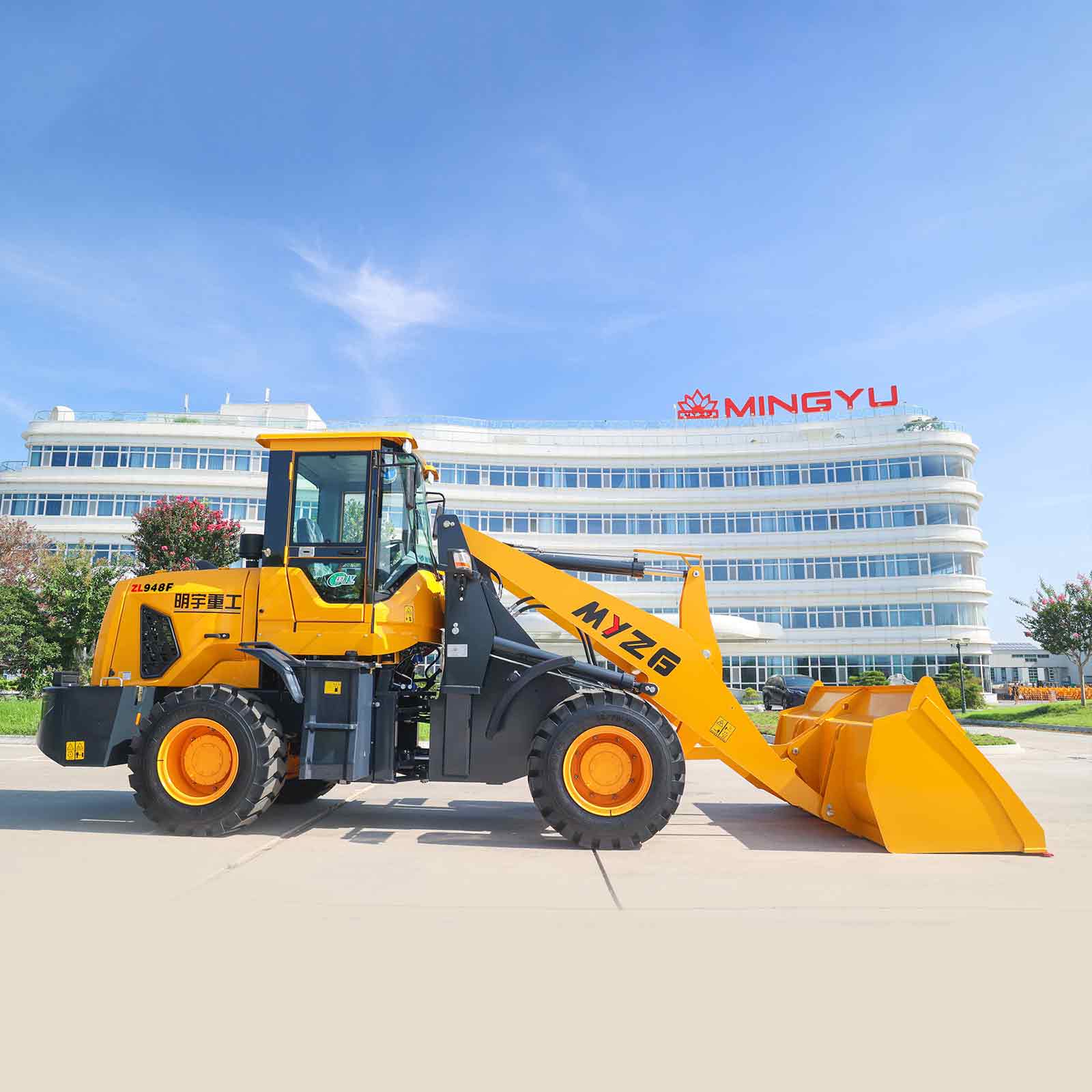
Draw the pile face, customer waiting position, loading position and exit route on one yard plan. Include pedestrians, parked delivery vehicles, the weighbridge approach and temporary storage. A 948F yard loader can be dimensionally compatible with a bay while the route between that bay and the truck remains awkward. The 2,775 mm minimum turning radius does not establish the space occupied by the bucket, rear body and carried material during every manoeuvre. Request a configuration-specific swept-path assessment where space is critical.
Review peak trading conditions with normal queues and stock levels shown. HSE traffic-route guidance supports considering suitable surfaces and route hazards alongside local requirements. Mark the 948F yard loader locations where visibility or customer movement could require a layout change.
Account for the ground beneath the route
Walk the route after rain as well as in dry conditions. Record potholes, soft edges, drainage covers, changes in surface level and areas where fines accumulate. The 5,480 kg published operating weight describes the machine listing; a loaded 948F yard loader introduces a different site-assessment question. Give the responsible site assessor the quoted configuration and expected load information. Do not infer acceptable ground pressure, bridge capacity or slab loading by dividing the operating weight by an estimated tyre area.
The listing specifies 16/70-20 tyres. Confirm the actual supply against surface and debris conditions. Tyre size does not approve an unstable verge. Resolve cleaning, surface repair and any assessment needed near drainage structures before assuming the 948F yard loader route is always available.
Compare equipment packages by the same sales workflow
A useful comparison presents the same material, receiving vehicle and route to every supplier. Ask each to identify the approved bucket and configuration, relevant loading geometry and any unresolved restrictions. Compare a 948F yard loader with another package on those common requirements rather than ranking machines by the largest isolated specification. A wider bucket may collect more light material per pass while fitting the stock bays less comfortably. A smaller machine may simplify access yet leave the receiving-body question unanswered.
Compare attachment inclusion, delivery terms, documents and support on a common basis. A photograph does not establish quotation scope. Keep unconfirmed items visible when pricing the 948F yard loader so purchasing does not count an unresolved feature as an included advantage.
Make the demonstration representative and measurable
Prepare a short demonstration brief with two or three representative tasks: gathering your main loose material, loading a typical delivery body and moving through the most constrained part of the yard. Use identified material and agreed loads under the supplier's permitted procedures. For the 948F yard loader, record attachment identity, ground condition and the receiving geometry. This context makes observations useful when a different bucket or machine is proposed later; a video without configuration details leaves too much room for assumption.
Observe queues, spills, blocked views and interference from other vehicles. Label any timings as specific demonstration results. Ask what prevented a smooth sequence; improving the 948F yard loader workflow may require a changed loading position or stock-bay arrangement as well as equipment selection.
Send a quotation brief that can become an order
Your enquiry should name the materials, relevant density evidence, usual order quantities, truck profiles and site dimensions. Attach the yard plan and photographs of constrained approaches. Ask MINGYU to confirm the 948F yard loader model designation, proposed bucket, included equipment and applicable operating documents. State the destination, quantity and requested delivery basis so the commercial response can be compared consistently. Ask for clarification of any website value that differs from the actual machine proposed for supply.
Match the delivered model, attachment and documents with the order. Arrange operator instruction and obtain maintenance information. Retain the selection record, and review it when material, truck size or bucket changes. A 948F yard loader should remain connected to the conditions for which it was assessed.
Explore o 948F wheel loader specifications, o faixa de carregadeira de rodas e Serviço e suporte MINGYU. Para um planejamento mais amplo do local de trabalho, consulte a orientação oficial relevante juntamente com as instruções da máquina e os requisitos locais aplicáveis.
Send MINGYU your material list, truck-body sketch and yard layout for a 948F yard loader configuration review. Request a written bucket recommendation, confirmed loading geometry and itemised quotation for your destination.
Perguntas frequentes
Does a full 1 m³ bucket always stay below 2,000 kg?
No. Material mass depends on bulk density and the actual quantity collected. The 948F yard loader lists bucket volume and rated load separately. Obtain material information and confirm the attachment's permitted loading conditions.
Can the 948F yard loader load my delivery truck?
Compare the actual body profile with the complete dumping movement. The listed 3,500 mm height and 900 mm distance need configuration-specific interpretation before suitability is established.
Is 2,775 mm the aisle width required?
It is the published minimum turning radius. It does not define the complete working aisle or swept path of a 948F yard loader with its attachment and load.
Which bucket should an aggregate yard request?
For a 948F yard loader, describe material condition, density information, stock-bay opening and receiving vehicles. Ask the supplier to identify a compatible bucket and document how it affects payload and geometry.
Why does the specification table say ZL948FM?
The captured page uses 948F in the product heading and ZL948FM in the model row. Include both references when requesting a 948F yard loader and confirm the designation and specification that apply to your order.