
Table of Contents
Begin SYZ10 yard access with the busiest delivery
A garden-material yard can have an entrance that looks generous in the morning and becomes difficult once customers park, a delivery truck arrives and loose material spreads beyond its bay. SYZ10 yard access should therefore be assessed against a normal busy delivery, with the yard in its usual working condition. The question is whether the machine, its attachment and the material can follow an agreed route while people and other vehicles use their assigned areas.
Choose a representative movement: collecting loose material from a bay, transferring it to an approved receiving point and returning for the next load. Draw that movement from beginning to end. Identify where the operator must reverse, cross another route or wait for a customer vehicle. A compact machine may be worth assessing for this work, but compact dimensions alone do not establish visibility, stability, acceptable ground conditions or the ability to complete the unloading task.
Translate the published size into SYZ10 yard access measurements
The SYZ10 page lists overall dimensions of 4,475 × 1,495 × 2,440 mm and an operating weight of 2,780 kg. These values provide a starting point for SYZ10 yard access. Ask MINGYU which attachment and equipment position the overall dimensions describe. Confirm whether any quoted option changes the width, height or length before comparing the figures with the entrance and working area.
For SYZ10 yard access, measure the narrowest usable opening rather than only the distance between gateposts. Hinges, latches, drainage channels, stored pallets and vegetation can reduce the available space. Record overhead beams and branches separately from side clearance. The necessary operating allowance depends on the task, visibility and the manufacturer's instructions; do not turn the difference between gate width and machine width into a universal safe-clearance rule. Photograph the measured constraints so the supplier understands the actual route.
Check corners during the SYZ10 yard access review
The published wheelbase is 1,095 mm. That dimension is useful in the machine description, but it does not give the complete swept path or the space required for a turn. For SYZ10 yard access, request a turning-envelope drawing for the quoted configuration. Include the attachment, rear overhang and load position in the drawing request. A machine can clear a straight opening and still be unable to negotiate the next corner as intended.
On the SYZ10 yard access sketch, mark likely turning locations on the yard plan and identify fixed objects around them. Where a route relies on temporary empty space, specify when and how that space will remain available. If the only workable turn requires several direction changes, record those movements in the trial. A longer but clearer route may be more practical than the shortest route through a crowded sales area. Make that comparison using the proposed operating arrangements, not an empty-yard demonstration alone.
Match the receiving point to the actual discharge envelope
The SYZ10 specification lists a dumping height of 2,080 mm and a bucket capacity of 0.38 CBM. SYZ10 yard access must connect those figures with the receiving point. Obtain the manufacturer's reference points and discharge drawing before judging a truck side, hopper edge or material bin. The stated height by itself does not describe forward clearance, bucket rollback or the space needed to approach and leave the receiver.
The SYZ10 yard access brief should measure the receiver in its ordinary position, including any raised suspension, uneven standing area or fittings above the side wall. Record whether the machine must discharge from one side or can use a more accessible position. Avoid assuming that a nominally low receiver will be suitable simply because its top edge is below the listed dumping height. Ask for a configuration-specific assessment and, where appropriate, a controlled trial with the actual receiving arrangement.
Keep material volume separate from permitted load
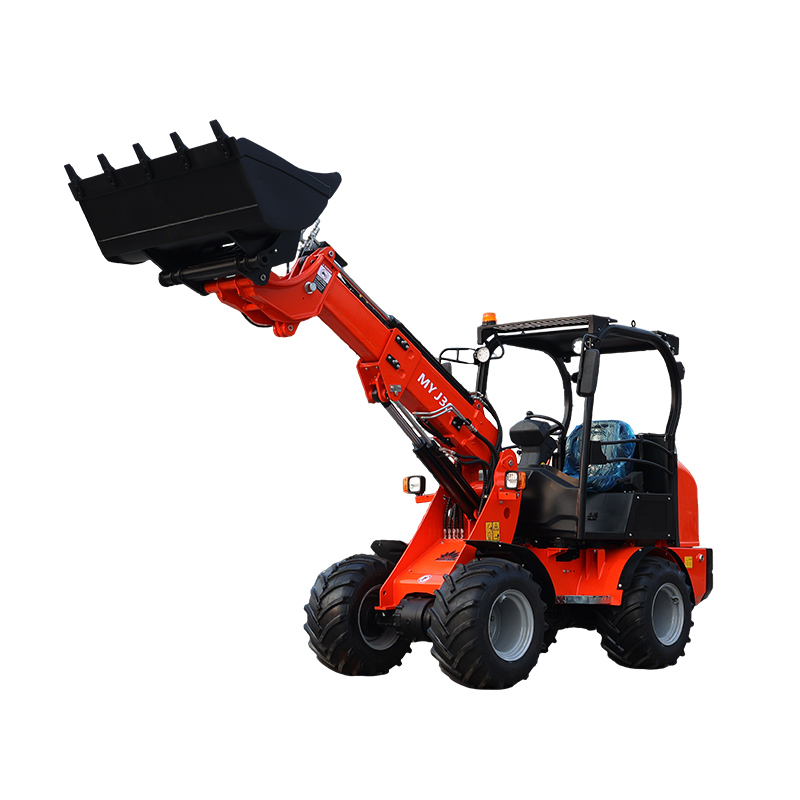
The rated loading figure on the page is 900 kg. It should not be read as a load available at every position or with every attachment. In SYZ10 yard access planning, request the relevant capacity information and operating instructions for the exact equipment supplied. The product is presented as a telescopic compact machine, making the relationship between load, position and attachment especially important to clarify.
For a quantity illustration, a material with a measured bulk density of 1,400 kg/m³ would weigh 532 kg in a hypothetical 0.38 m³ volume. The multiplication describes the assumed material quantity; it does not establish a safe SYZ10 operating load, a permitted fill level or a capacity at reach. Wet soil, bark, gravel and compost can behave differently. Measure the material and assess the approved loading arrangement instead of estimating mass from appearance or using one density for every bay.
Assess the ground along the complete movement
A yard route may include concrete, compacted aggregate, drain covers and soft edges within a few metres. SYZ10 yard access should record those changes rather than assigning one surface description to the whole property. Have the responsible site personnel assess bearing condition, slope, drainage and any covers or structures on the route. The listed operating weight is not a ground-pressure value and does not establish the capacity of a slab, cover or bridge.
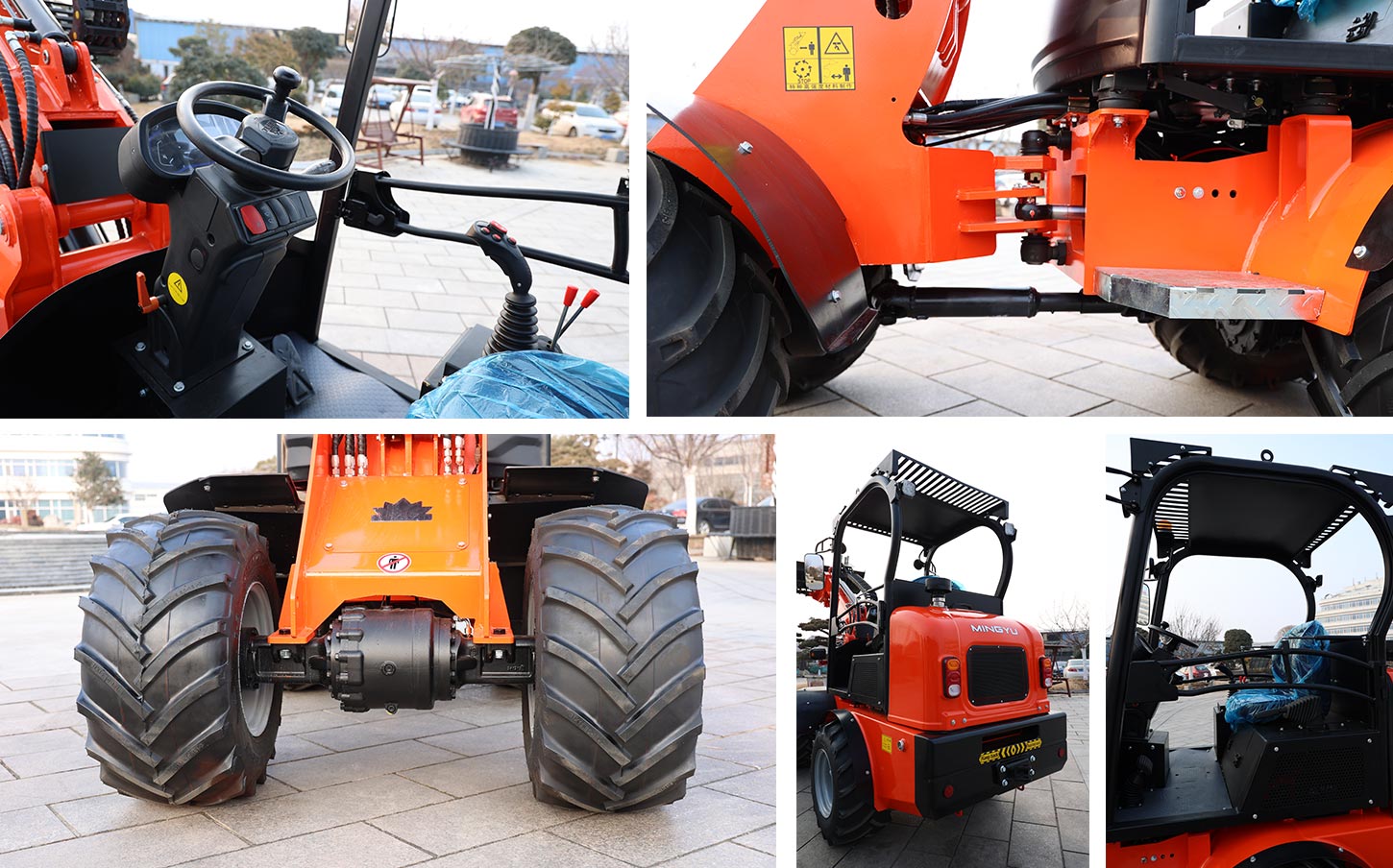
The published tyre designation is 31×15.5-15. Confirm the actual tyre supplied and follow its applicable instructions, including inspection and inflation requirements. Tyre size does not establish that a machine is suitable for every muddy or uneven surface. Where conditions deteriorate after rain, describe the alternative route, the criterion for suspending the movement and the person responsible for that decision. Keep the assessment tied to observed site conditions and the supplied machine documentation.
Separate customer collection from machine movement
Garden-material businesses often combine a working yard with a retail collection area. SYZ10 yard access should show where customers wait, where vehicles are loaded and how the operator knows the receiving area is ready. Have the site team establish suitable separation and communication arrangements under the applicable workplace requirements. Do not rely on a customer's familiarity with the yard or the operator's ability to see around a load.
Check how the layout behaves when a customer parks outside the expected position or a delivery blocks a normal route. An agreed waiting place and a clearly controlled loading sequence can be more valuable than a small reduction in travel distance. During a supplier visit, walk the route with operations staff and identify these interruptions. The objective is to assess a workable handling process with the proposed machine, including the ordinary pauses that a public-facing yard creates.
Compare layout changes before choosing a different machine
Sometimes the main restriction in SYZ10 yard access is the location of stored materials rather than the machine itself. A material bay placed near the entrance can create repeated crossings; moving the receiving point may simplify the entire route. Compare feasible layout changes with alternative equipment using the same representative delivery. Include the effect on customers, storage capacity, replenishment and site supervision.
The SYZ10 yard access table organises that comparison. It does not select a machine or prescribe a traffic arrangement. Add measurements and supplier-confirmed envelopes before deciding which alternative is practical. Keep a record of why a proposed route was accepted or rejected so a later change in bay position does not silently invalidate the selection.
| Yard constraint | Layout option to assess | Machine information needed |
|---|---|---|
| Tight gate approach | Move waiting or storage position | Travel dimensions and turning envelope |
| High-sided receiving vehicle | Assess another permitted receiving position | Discharge geometry and applicable capacity |
| Busy customer crossing | Reorganise collection and waiting sequence | Visibility and operating instructions |
| Soft edge near a bay | Assess a suitable alternative route | Ground and slope requirements |
| Repeated reversing | Compare a revised circulation route | Complete swept path with attachment |
Test SYZ10 yard access with ordinary interruptions
A useful demonstration for SYZ10 yard access starts from the ordinary parking or collection position and finishes when the machine is ready for its next movement. Agree the trial with competent personnel and the supplier. Use a representative material and a permitted loading arrangement. Record approach, collection, travel, discharge, return and waiting separately, while retaining the site conditions and machine configuration with the results.
Do not extrapolate a single fast cycle into an hourly output promise. The yard may spend more time managing customer vehicles or waiting for a receiver than moving material. Observe whether material spills into the route, whether cleanup interrupts work and whether the operator can follow the agreed circulation without improvisation. These observations help distinguish a machine-fit issue from a layout or scheduling issue. They also provide a better basis for comparing alternative handling arrangements.
Make the enquiry specific enough to resolve access questions
Send MINGYU the route drawing, measured openings, receiver dimensions, material descriptions and photographs of the restrictive locations. Ask for the quoted attachment, capacity information, swept path and discharge drawing. The page lists a Kubota V1505 engine and rated power of 18.5 kW; confirm the supplied engine configuration and the destination-specific documentation in the quotation. Those published identifiers are not a guarantee of local regulatory approval or site suitability.
Close the SYZ10 yard access review with a list of confirmed facts and outstanding conditions. Identify who approves the route, who checks the ground and what evidence is required before acceptance. Retain the agreed configuration at handover, together with operating and maintenance information. If a receiving vehicle, attachment or yard layout changes, reopen the affected assessment. This makes the original selection useful throughout the machine's service rather than leaving it as an isolated purchasing exercise.
Explore the SYZ10 telehandler specifications, the telehandler range and MINGYU service and support. For wider workplace planning, refer to the relevant official guidance alongside the machine instructions and applicable local requirements.
Request a SYZ10 yard access assessment with your measured route, receiving-point dimensions and material-handling sequence. Ask MINGYU to confirm the attachment, capacity information and operating envelope for the configuration offered.
Frequently asked questions
What dimensions start a SYZ10 yard access review?
The published overall dimensions are 4,475 × 1,495 × 2,440 mm. Confirm the attachment and equipment position represented, then measure the complete route and request a turning-envelope drawing.
Does the 900 kg rating apply at every telescopic position?
The product-page rating does not establish capacity at every position. Request the configuration-specific capacity information and operating instructions for the supplied attachment and intended task.
Can a 2,000 mm truck side be accepted from the dumping-height figure?
No. The listed 2,080 mm height alone does not describe the discharge envelope or required clearance. Measure the receiver and obtain the reference points and drawing for the quoted configuration.
Is the wheelbase enough to calculate the turning space?
No. The listed 1,095 mm wheelbase is one machine dimension. The complete swept path also depends on steering geometry, overhang, attachment and load position.
What should the yard provide with a quotation request?
Provide a measured route, gate and overhead restrictions, receiver dimensions, material information, ground conditions and photographs. Add the normal customer and delivery sequence so the supplier can assess the actual movement.