
Table of Contents
Tại sao biểu đồ tải CZ7035 lại quan trọng
The CZ7035 load chart is the document a buyer needs when a load must be placed at a particular combination of height and forward reach. The product page lists 3,500 kg rated load, 7,000 mm maximum lifting height and 2,600 mm maximum forward reach. Reading those three values as one combined capability would create an unsupported assumption. The page does not establish that a 3,500 kg load can be placed at the maximum height or the maximum forward reach.
A useful enquiry starts with the placement problem. State the load mass, its dimensions and centre of gravity, the required attachment and the position where the load must finish. Show where the telehandler can stand. The supplier can then identify the relevant configuration and capacity information. This article explains how to prepare that enquiry and review the response. It does not reproduce an actual CZ7035 capacity chart or approve a lifting operation, because a configuration-specific chart was not available in the captured product page.
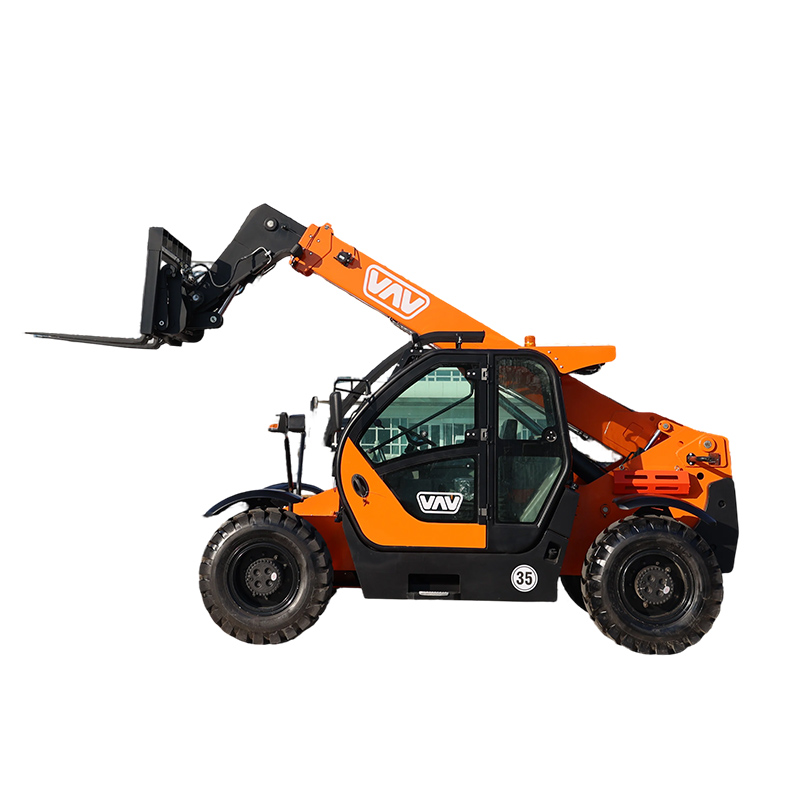
Giới hạn tiêu đề riêng biệt từ biểu đồ tải CZ7035
A CZ7035 load chart is needed alongside the published figures. Those figures describe different specification boundaries. Rated load is a mass rating with an applicable basis. Maximum lifting height describes a vertical boundary. Maximum forward reach describes a horizontal boundary. Engine power, operating weight and outside dimensions provide other useful context, but they do not supply the missing relationship between load and boom position. Keep the original parameter labels beside the values when discussing them with the supplier.
The page also lists dimensions without attachments of 4,900 × 2,260 × 2,380 mm, a 3,950 mm turning radius, 7,850 kg operating weight, 81 kW engine power and 16/70-20 tyres. Those details support access, transport and configuration questions. They are not inputs from which a buyer should invent a capacity chart. Ask which dated specification sheet and capacity documentation apply to the machine being quoted, and confirm any difference between the website description and the actual supply scope.
| Published CZ7035 parameter | Giá trị | Question still to resolve |
|---|---|---|
| Tải trọng định mức | 3,500 kg | At which load centre and configuration does this apply? |
| Maximum lifting height | 7,000 mm | What capacity applies at the required height and reach? |
| Maximum forward reach | 2,600 mm | How is reach measured on the applicable chart? |
| Dimensions without attachments | 4,900 × 2,260 × 2,380 mm | What is the complete travelling and working envelope? |
| Trọng lượng hoạt động | 7,850 kg | Which supplied configuration is included in this mass? |
Cung cấp cho yêu cầu biểu đồ tải CZ7035 một tải xác định
For the CZ7035 load chart enquiry, provide the complete load mass, including packaging and any lifting or handling accessories appropriate to the proposed operation. Add the package length, width and height, and describe whether its mass is evenly distributed. A pallet of uniform cartons and a machine with a heavy motor at one end can have similar external dimensions while presenting different centres of gravity. If the centre of gravity is uncertain, resolve it through suitable information or assessment before asking the telehandler to handle the load.
For a simple geometric illustration, the midpoint of a uniformly distributed package 1,200 mm deep along the forks is 600 mm from its near face. That calculation does not establish the actual load centre of every package or the capacity available on the CZ7035. The load position on the attachment and the reference points used in the manufacturer's documentation also matter. Send a sketch that identifies those points instead of writing only a pallet size in the enquiry.
Kết nối phác thảo vị trí với biểu đồ tải CZ7035
To support the CZ7035 load chart review, a placement sketch should show the proposed standing area, the receiving surface, the load and the obstructions between them. Give the required vertical height and the horizontal distance to the placement point. Identify the reference line used for each measurement. A distance measured from a wall or from the front tyre is not automatically the forward-reach coordinate used by the capacity chart. Ask the supplier to translate the site requirement into the chart's own reference system.
Consider a hypothetical load of 2,000 kg that must be placed 4.5 m above the ground beyond a receiving edge. The fact that 2,000 kg is below the published rated load and 4.5 m is below the published maximum lifting height does not establish suitability. The required forward position, attachment, load centre and other chart conditions remain unresolved. Record the load path as well as its final position so the technical review considers the movement required to get there.
Request the CZ7035 load chart for the supplied attachment
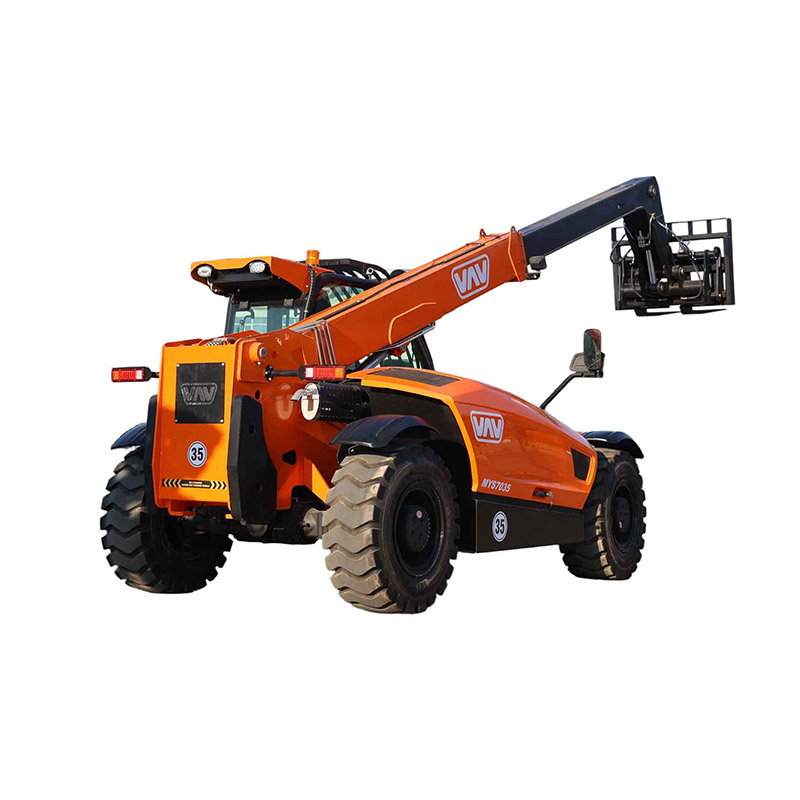
For the correct CZ7035 load chart, identify the attachment by model and function. The website imagery can show a machine with different equipment, but a photograph does not establish what is included in the quotation or which capacity information applies. Forks, buckets and other approved attachments introduce different mass and geometry. Ask for the applicable instructions and capacity documentation for the exact combination. Do not calculate a new allowable load by simply subtracting an attachment weight from the 3,500 kg headline figure.
Confirm the attachment interface, locking arrangement and any hydraulic or electrical functions. If the supplier proposes an alternative attachment, review the capacity documentation again rather than carrying the first assumption across unchanged. Include the attachment identity in the order and handover record. Personnel platforms and suspended-load equipment require their own suitability and approval questions. The presence of a telescopic boom or a quick-coupler does not by itself establish permission for those uses.
Read the CZ7035 load chart conditions and notes
When the supplier provides the CZ7035 load chart, first check its model, version and configuration references. Read the conditions, symbols, permitted attachment information and any restrictions before looking for a capacity value. Ask the technical team to identify the chart position that corresponds to the submitted site sketch. A screenshot with one number circled can omit the notes that make that number meaningful. Keep the complete document with the quotation and the machine information.
A chart review should resolve an actual requirement rather than search for the largest convenient number. If the planned position lies near a boundary, ask how the position should be identified and what instructions apply. Do not interpolate or extend the chart through an unsupported calculation. Record the supplier's explanation and any operating restrictions in plain language for the people who will plan and supervise the work. The result should remain tied to the approved documentation, not become a separate homemade rating table.
Keep the ground assessment separate from catalogue capacity
A CZ7035 load chart does not establish site suitability. The machine must stand and travel on a site that is suitable for the proposed operation. The published 7,850 kg operating weight and tyre description are useful discussion points, but neither approves the ground. Identify slopes, edges, drains, underground structures, recently disturbed material and changing weather conditions. Have the relevant competent site team assess the standing area and route. Ask the supplier for the machine and configuration information needed for that assessment.
Also identify any working configuration that changes the occupied space or ground loading. Do not assume that stabilisers are included or that a particular stabiliser arrangement is required from a photograph of a different model. Obtain the CZ7035 instructions for the actual supply configuration. A capacity chart and a site assessment answer related but separate questions: the chart cannot make unsuitable ground suitable, and a firm-looking surface cannot increase the machine's documented capacity.
Check access for the full travelling and working envelope
The CZ7035 load chart review should sit beside a separate access check. The listed dimensions exclude attachments, so include the fitted equipment and the permitted travelling position when checking access. Survey the narrowest opening, lowest overhead obstruction and the approach to the standing area. Consider the load if it will be carried through the route. A 3,950 mm turning-radius figure does not automatically describe the required loaded aisle or the complete swept path. Ask for the relevant layout assessment for the quoted configuration.
Separate travelling clearance from working clearance. The machine may pass through a gate but still lack room to approach the receiving position, move the boom or withdraw the attachment after placement. Show nearby buildings, parked vehicles and pedestrian routes in the layout. If the solution depends on moving an obstruction before each operation, assign responsibility for that arrangement. A purchase assessment should explain how the site will remain usable during normal busy periods rather than only when the yard is empty.
Compare quotations against the same CZ7035 load chart task
Use the CZ7035 load chart task to compare two telehandler quotations against the same load, attachment and placement sketch. A higher maximum lifting height does not automatically mean more capacity at the required forward position. A lower operating weight or a smaller outside dimension may improve one part of access while introducing a different limitation. Put the site requirement beside each applicable chart result and record the configuration used. Keep unconfirmed items visible instead of treating a blank catalogue cell as a passing result.
The comparison table below is an enquiry framework, not a comparison of verified CZ7035 capacities. It shows why apparently similar placement tasks need separate checks. Both hypothetical cases must be assessed against the actual chart and site conditions. Once the technical requirements are resolved, compare the common commercial scope: attachment, delivery condition, documents, operator familiarisation, maintenance information and support. This avoids selecting a lower quoted price that describes a different equipment package.
| Illustrative enquiry | Task A | Task B |
|---|---|---|
| Load mass | 1,400 kg, hypothetical | 2,000 kg, hypothetical |
| Placement height | 3.0 m, hypothetical | 4.5 m, hypothetical |
| Forward position | Measured sketch required | Measured sketch required |
| Attachment | Identify exact supplied model | Identify exact supplied model |
| Capacity conclusion | Not established here | Not established here |
Retain the CZ7035 load chart in the handover record
For a complete CZ7035 load chart request, send MINGYU the load information, placement sketch, site route, ground-assessment questions, destination and required quantity. Request the exact CZ7035 configuration, the applicable load chart, attachment instructions and the technical explanation of how the proposed task fits the documentation. Ask which conditions remain the owner's responsibility. Retain the dated response with the quotation so purchasing, operations and maintenance teams are working from the same equipment description.
At delivery, match the model, serial number, attachment and supplied documents to the order. Resolve any difference before normal use. Make the applicable chart and instructions available to the people who plan and operate the machine, and arrange the required training and site procedures. Record the initial configuration and inspection evidence for later support. If the attachment or the task changes, reopen the capacity and site review instead of assuming the original selection covers the new operation.
Explore the CZ7035 telehandler specifications, the phạm vi Telehandler and MINGYU service and support. For wider workplace planning, refer to the relevant official guidance alongside the machine instructions and applicable local requirements.
Request the CZ7035 load chart and operating information from MINGYU with your load details, attachment and placement sketch. Ask the technical team to confirm the exact configuration and any conditions before ordering.
Những câu hỏi thường gặp
Can the CZ7035 lift 3,500 kg at 7,000 mm height?
The captured product page lists those as separate headline values. It does not establish their simultaneous availability. Request the applicable load chart for the actual height, reach, load centre and attachment.
Where can I obtain the CZ7035 load chart?
Ask MINGYU for the chart and instructions matching the exact quoted configuration. Include the intended attachment and placement sketch so the technical team can identify the relevant documentation.
How does the CZ7035 load chart relate to maximum reach?
No. The listed 2,600 mm maximum forward reach is a geometric specification. Capacity at a particular position requires the configuration-specific chart and its conditions.
Can attachment weight simply be subtracted from rated load?
That subtraction does not establish an approved capacity. Attachment geometry, load centre and the applicable machine documentation matter. Obtain confirmation for the exact combination.
What information should accompany a telehandler quotation request?
Provide load mass and geometry, placement height and forward position, the required attachment, the site route and standing-area information, destination and quantity. Ask for the dated specification and applicable capacity documents.