
Table of Contents
Use WH388 work planning to assess the whole repair
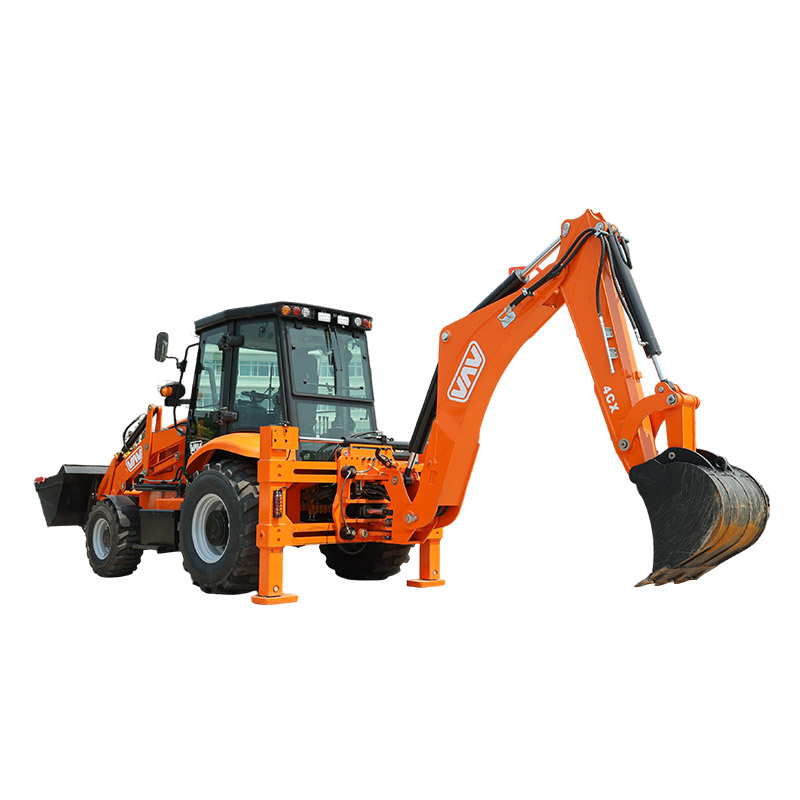
Municipal repair teams rarely buy equipment for one uninterrupted excavation. A typical assignment can involve opening a work area, exposing a damaged asset, moving spoil, bringing in replacement material and restoring the surface. A WH388 backhoe loader offers front loading and rear digging functions in one machine, but WH388 work planning must establish how those functions fit the actual sequence.
The WH388 backhoe page lists a 1.0 m³ loader bucket, a 0.3 m³ backhoe bucket, 2,500 kg rated load and 75 kW engine power. For municipal WH388 work planning, the central question is whether one crew can organise its recurring repairs effectively around this equipment. Start with work orders and site layouts, then use the specifications to test the proposed workflow.
Translate work orders into a task sequence
Base WH388 work planning on several representative repairs. Record which tasks require the front bucket, which require the rear equipment and which need another tool or specialist contractor. Add the time when people must work in or near the excavation, and identify when the machine must stop.
For a hypothetical drainage repair, WH388 could sequence material handling, an approved digging task and spoil loading after the work area is rearranged. This is an illustrative sequence, not an operating method or productivity forecast. The buyer should ask whether the proposed layout permits each stage and how transitions will be managed. Where the work requires concurrent digging and loading, compare a second machine or an alternative sequence rather than assuming one machine eliminates the conflict.
Resolve rear geometry during WH388 work planning
A key gap in WH388 work planning is that the captured specification does not provide the rear excavator's maximum digging depth, reach or working-envelope drawing. Its table includes a row labelled Loader Digging Depth with 52 mm. That label and value must remain associated with the front loader entry; it is not evidence of the rear backhoe's excavation depth. Ask MINGYU for a current technical drawing that clearly distinguishes front and rear equipment and defines the measurement references.
Send the required excavation geometry with your WH388 brief. Show the deepest point, the farthest position the rear equipment must reach and the locations where the machine can stand. Add existing walls, utilities and other restrictions. The supplier can then explain the relevant machine geometry, while the responsible site team develops the excavation plan and any required support or protection.
Separate spoil handling in WH388 work planning
The WH388 backhoe's 0.3 m³ rear bucket and 1.0 m³ front bucket describe different working tools. For WH388 work planning, do not turn their volume ratio into a predicted time saving. Excavated material may also occupy a different volume from the undisturbed ground. Ask the estimating team to use a defensible material basis rather than equating trench volume directly with truckloads or bucket counts.
For WH388, draw where spoil will go during each stage. A temporary pile may obstruct the next machine position or the public access route. Immediate truck loading may avoid that pile but require a truck to be present when digging occurs. A separate loading stage may work better where the truck cannot remain nearby.
Compare front loading against the receiving vehicle
The WH388 backhoe has a published loader dumping height of 2,760 mm. During WH388 work planning, before choosing the receiving truck, ask how that height is measured and obtain the relevant bucket-position geometry. The receiving body's top edge, loading opening and approach position all matter. A truck-body height below a catalogue figure does not by itself prove that material will clear the edge or fall into the intended part of the body without interference.
The WH388 brief should name the receiving vehicle or provide its drawing. Show whether the loader approaches squarely or at an angle, where the truck stands and how pedestrians are excluded from the manoeuvre. Include the material's bulk density and the intended bucket because the published 2,500 kg rated load is not permission to fill any bucket with any material. Request the applicable loading limits and instructions for the equipment combination being proposed.

Make room for changing between front and rear work
The published WH388 backhoe dimensions are 6,050 × 2,465 × 3,152 mm, and the minimum turning radius is listed as 6,581 mm. In WH388 work planning, these figures deserve attention in streets and narrow service areas, but they do not describe every working position. Request drawings for the travel configuration and the rear working arrangement, including any stabilisers fitted. Do not infer their footprint or ground reactions from the overall width or a product photograph.
Walk through the task transitions during WH388 on the proposed layout. Can the machine leave its digging position without passing through the material pile? Can it approach the front-loading task while the excavation remains protected? Is there a clear space for the next delivery? Identify those transitions before purchase so the comparison includes workable site organisation rather than only equipment dimensions.
Compare equipment strategies through WH388 work planning
Use WH388 work planning to compare the backhoe loader with alternative equipment arrangements through the same job sequence. A backhoe loader, a compact excavator with separate loader, and a hired specialist can divide the work differently. The table is a decision framework for hypothetical municipal assignments, not a claim that one strategy has lower costs or higher output.
The backhoe loader proposal may be attractive in WH388 when its two functions suit sequential work across recurring repairs. Where simultaneous operations or particularly restricted access dominate, the municipality should test a different arrangement. Obtain comparable quotations only after defining the required scope. Include attachments, delivery, documentation, operator familiarisation and support in the comparison.
| Illustrative work pattern | Question for a backhoe loader | Alternative to evaluate |
|---|---|---|
| Dig, then load spoil after repositioning | Can one machine complete the sequence within the available layout? | Separate excavation and loading equipment |
| Dig while another crew handles incoming material | Does sharing one machine delay either crew? | Two machines or planned delivery windows |
| Very restricted service entrance | Do travel and working configurations fit? | Equipment selected for the measured access |
| Occasional unusually deep repair | Does verified rear geometry cover the requirement? | Specialist hire for the exceptional task |
Keep underground conditions in the project plan
WH388 work planning must address the excavation hazards for each repair site. The municipality must arrange the appropriate investigation of buried services, ground conditions, nearby structures and protection of the excavation. Give the project team the proposed machine information so it can assess the loading and space implications, and use official excavation guidance alongside local requirements and competent planning.
In the WH388 work planning brief, identify constraints that affect machine selection without turning the sales brief into an improvised digging procedure. A service location may require a different excavation method; an edge may need protection or a revised standing position. Ask the responsible planners to resolve those conditions.
Plan fleet mobilisation and ownership responsibilities
The WH388 backhoe page lists an operating weight of 8,360 kg. For WH388 work planning, request the actual supplied mass and transport dimensions, including the selected buckets and any other equipment, when arranging mobilisation. Ask for approved loading, securing and transport information. Public-road travel requirements depend on the destination and supplied configuration; do not assume the machine is permitted to travel between municipal sites simply because the repair locations are close together.
For WH388 work planning after purchase, assign responsibility for inspections, defect reports, parts ordering and maintenance records. Obtain the manufacturer's schedule and instructions for the actual machine rather than creating intervals from general fleet habits. The gearbox is described as mechanically operated hydraulic synchronized shift, which is an identification detail to confirm during specification and familiarisation. Ask about documentation language, service access and parts identification so maintenance staff can support the machine after purchasing staff complete the order.
Test the WH388 work planning assumptions in a demonstration
A demonstration should resolve the municipality's open WH388 work planning questions. Provide a representative layout, the material-handling task and the intended front-to-rear sequence, subject to the appropriate safe arrangements. Ask the supplier to identify the machine configuration and explain how its documented geometry relates to the task. Record observations such as access conflicts and required repositioning. Do not convert one favourable demonstration into a guaranteed production rate across all municipal repairs.
Before ordering, close the WH388 work planning gaps in writing: rear depth and reach, front dump geometry, actual buckets, travel configuration and documentation. Retain the agreed equipment description with the purchase record and use it during delivery acceptance. The strongest selection case explains which recurring repairs the machine can support and which exceptions will continue to need another arrangement. That gives supervisors an operational boundary they can use when assigning future work orders.
Explore the WH388 backhoe loader specifications, the نطاق اللودر المحراث and MINGYU service and support. For wider workplace planning, refer to the relevant official guidance alongside the machine instructions and applicable local requirements.
Ask MINGYU to review your WH388 work planning brief with representative municipal repair sequences, digging requirements and receiving-truck details. Request the missing rear geometry and a quotation that identifies every supplied bucket, document and support item.
Frequently asked questions
What work should drive WH388 work planning?
Use representative repairs that require both digging and loading. Map their order, access and material movements, then check the actual configuration against each stage rather than assuming both functions remove every bottleneck.
Does the product page establish maximum rear digging depth?
The captured specification does not establish rear depth. WH388 work planning needs a rear working-envelope drawing. The 52 mm entry is labelled Loader Digging Depth and must not be read as the rear backhoe depth.
Can the WH388 backhoe load any truck below 2,760 mm?
That conclusion is not established by the listed dumping height. WH388 work planning must confirm the measurement reference, dump position, receiving-body geometry and approach arrangement for the selected bucket.
Are the two bucket capacities interchangeable?
No. The published 1.0 m³ front bucket and 0.3 m³ rear bucket serve different functions. Compare the relevant material, permitted loading and task geometry for each.
What should a WH388 work planning enquiry include?
Send sample work sequences, required excavation geometry, receiving-truck details, access measurements, site constraints, destination and quantity. Ask for current drawings, equipment scope and support documentation.