
Table des matières
Define the WD10 drainage excavator work package
Restricted-access drainage work often looks straightforward on a drawing: a short line between a collection point and an existing connection. On site, a gate, retaining wall or narrow working strip can determine whether the job is practical. A WD10 drainage excavator assessment should start with the whole route and the material that must leave it. Digging depth matters, but so do the standing positions, the space to place spoil and the way the machine will enter and leave the property.
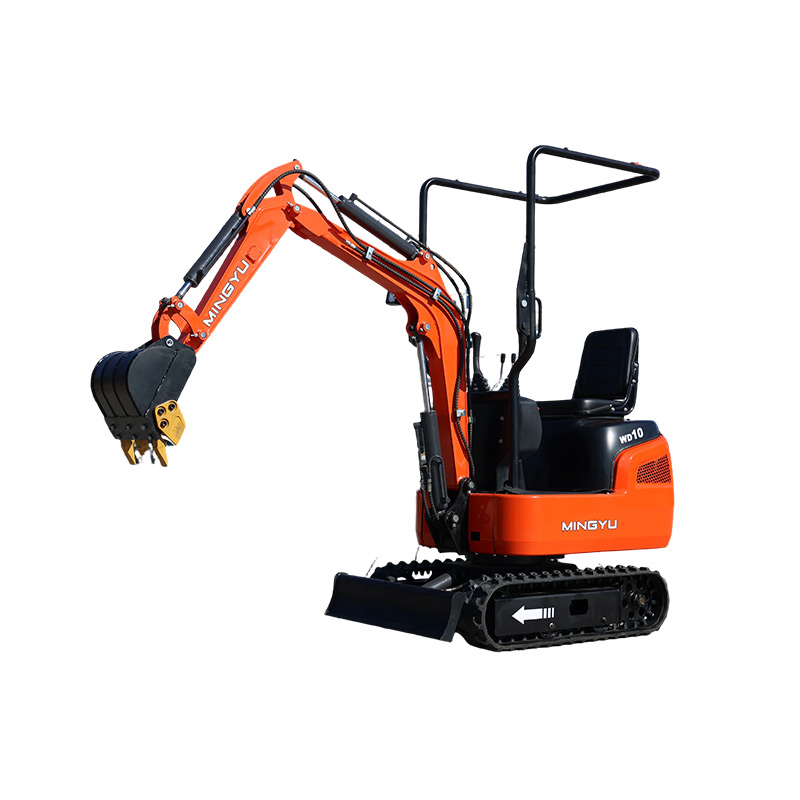
The WD10 listing gives 800 kg gross weight, 0.025 m³ bucket capacity and 1,770 mm maximum digging depth. These are starting references, not a drainage design or full working envelope. A WD10 drainage excavator brief must connect access, excavation geometry and the onward handling of spoil.
Turn the drainage design into an excavation profile
Obtain the designed route, levels and excavation requirements from the person responsible for the drainage design. Show the required bottom level along the route, not just the pipe diameter. Bedding, connection details and ground levels can make the excavation differ from the nominal depth of a pipe. For the WD10 drainage excavator enquiry, send a section drawing that identifies where depth is measured and the positions from which the machine would work. Avoid deriving the excavation solely from a homeowner's estimate of how deep a previous drain seemed to be.
A hypothetical rectangular trench 12 m long, 0.30 m wide and 0.60 m deep has volume 2.16 m³. This is arithmetic, not a design or output estimate for a WD10. Changing levels, pits and loose-spoil volume require separate consideration.
Review digging depth together with reach and standing space
The published 1,770 mm maximum digging depth is a boundary specification. It does not describe the full relationship between depth and horizontal reach at every boom position. Ask for the working-range information for the proposed WD10 drainage excavator configuration and compare it with the route section. A trench located beyond a wall or close to a fixed obstruction may require a different standing position from an unobstructed excavation. That change can make horizontal geometry as important as the headline depth.
Mark repositioning locations and how the machine reaches them. Corners and short working strips can constrain the connection. Ask which route segments each WD10 standing position can address; keep unconfirmed horizontal geometry visible instead of accepting maximum depth for the whole project.
Do not use track gauge as the entrance width
The captured WD10 table lists a 690 mm track gauge. Track gauge and overall machine width are different measurements, so that number does not establish whether the excavator passes through a 700 mm or any other opening. Request the complete transport and working dimensions of the supplied WD10 drainage excavator. Ask the supplier to identify any relevant configuration changes and their instructions. The captured specifications alone do not establish adjustable width, a folding structure or a permitted narrow-access arrangement.
Measure clear openings at hinges, latches and projections, plus the approach and overhead space. A narrow machine can still lack alignment room beside a tight gate. Provide a dimensioned access plan for the WD10, using photographs to explain rather than replace measurements.
Plan where every bucket of spoil will go
A narrow drainage corridor may leave little room to retain excavated material. Identify whether spoil will be stockpiled in an assessed location, moved through the site or removed directly to a suitable receiving container. Do not assume the machine can always swing to a pile beside the trench. For the WD10 drainage excavator, request the relevant working envelope and assess it against buildings, boundaries and the planned excavation. The practical handling route for spoil can decide the equipment arrangement even when the trench depth itself is modest.
Dividing the hypothetical 2.16 m³ trench by the 0.025 m³ bucket gives 86.4 nominal bucket volumes, not a cycle count or time estimate. Fill, material and rehandling remain unresolved. Discuss the WD10 attachment and separate spoil transport rather than deriving production from that arithmetic.
| Project constraint | Why it matters | Information needed before selection |
|---|---|---|
| Narrow property entrance | Track gauge is not overall width | Complete machine envelope and measured approach |
| Trench beyond a fixed obstruction | Depth alone omits horizontal geometry | Section drawing and working-range information |
| No nearby spoil space | Excavation requires a removal route | Receiving location and separate handling plan |
| Known or suspected services | Equipment size does not remove service risk | Service information and site investigation process |
| Finished garden or paving | Travel and spoil affect reinstatement | Surface-protection and restoration scope |
Match the bucket to the designed excavation
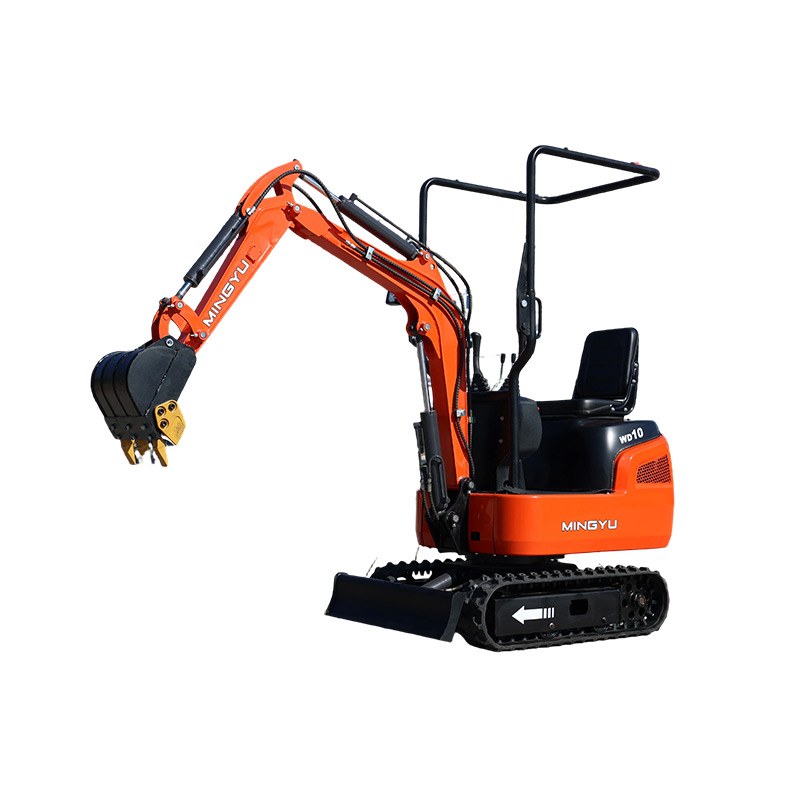
Ask for the width, mass and interface details of the bucket included in the quotation. Rated capacity alone does not tell the buyer whether its cutting width suits the designed trench. A bucket that excavates a wider section than required may change the quantity of material handled and the reinstatement work. For a WD10 drainage excavator, submit the excavation dimensions and material description, then request an identified compatible attachment. Do not infer a narrow trench bucket from a general product photograph.
Request compatibility and hydraulic requirements for any alternative attachment. The captured listing establishes no auxiliary-flow figure or breaker approval. Identify additional equipment separately in the WD10 drainage excavator order and revisit geometry if the quoted bucket changes.
Resolve service and excavation conditions before deployment
Identify available information about buried services and existing drainage, and arrange the investigation and planning required for the site. A compact machine does not make an unknown service harmless. The HSE excavation guidance is an official reference for excavation planning, including ground stability and underground services. Apply relevant local requirements and competent site assessment. The WD10 drainage excavator selection should proceed with a clear understanding of where mechanical excavation is appropriate and which parts of the project require a different approved approach.
Ground stability, nearby structures, water and people need site assessment. Neither low weight nor maximum depth decides excavation protection. Give the responsible team the WD10 drainage excavator configuration and standing positions; do not derive universal edge distances from the product table.
Consider the surface you must return to the client
On a finished property, the cost of a drainage job includes restoring access and surrounding surfaces. Photograph the proposed route and record paving, lawn, steps and existing damage before equipment arrives. The listed 800 kg gross weight is useful background, but it does not establish acceptable loading on every paving slab, cover or suspended structure. Have the responsible person assess the route with the actual WD10 drainage excavator configuration and any relevant additional load or equipment information.
Discuss surface protection, turning and spoil containment through the responsible site process. Restoration may influence the preferred access route. Assess the WD10 drainage excavator against the property as it will be handed back and put reinstatement responsibilities in the project scope.
Check transport and support without inventing capability
The listing identifies a K019ZFC-1 engine and 7 kW rated power. Request the supplied engine documentation, maintenance information and parts-support details from MINGYU. It also lists 30° climbing ability, which should not be treated as permission to use any particular site slope or loading ramp. The WD10 drainage excavator transport plan needs the applicable loading instructions and a suitable vehicle, restraint arrangement and route assessment. A catalogue angle does not replace those requirements.
Obtain actual supplied mass and transport dimensions, including attachments. Headline gross weight alone cannot establish the complete transport payload. Ask how the WD10 drainage excavator and engine are identified for parts support, and obtain the supplied instructions without assuming intervals or local stock.
Ask for a configuration review with a complete site sketch
A useful enquiry combines the drainage profile, entrance measurements, working-position plan, material description and spoil destination. Add photographs that explain the difficult sections, then specify the country or port, required quantity and any attachment request. Ask MINGYU to confirm the WD10 drainage excavator's complete dimensions, applicable working range and included bucket. Keep missing values visible in the response so the buyer can tell whether the supplier has resolved the actual access question or only repeated the published depth.
Agree representative conditions for any demonstration; an open-ground video cannot prove a restricted layout. At handover, verify equipment and documents against the order. Retain the WD10 drainage excavator access and excavation record for later route changes or attachment proposals.
Explorez le WD10 excavator specifications, le gamme excavatrice et Service et support MINGYU. Pour une planification plus large du lieu de travail, se référer à les orientations officielles pertinentes parallèlement aux instructions de la machine et aux exigences locales applicables.
Send MINGYU a drainage section, measured access sketch and spoil-handling plan for a WD10 drainage excavator review. Request complete machine dimensions, working-range information and an identified bucket in the quotation.
Questions fréquemment posées
Will the WD10 fit through a 700 mm gate?
The listed 690 mm track gauge is not overall width. Request the complete WD10 drainage excavator dimensions and compare them with the clear gate opening and its approach before drawing a conclusion.
Does 1,770 mm digging depth cover my drain route?
Only a working-range review can establish the relevant geometry. Provide required depths, horizontal positions and standing locations for the WD10 drainage excavator rather than checking one maximum value.
How many metres of trench can it excavate per hour?
The captured WD10 drainage excavator page does not establish a production rate. Material, excavation section, repositioning and spoil handling vary. Ask for a representative assessment with clearly stated conditions.
Which bucket width comes with the machine?
The listing gives 0.025 m³ rated bucket capacity but does not establish cutting width. Request the exact bucket specification for the WD10 drainage excavator and compare it with the designed excavation.
Can the 30° climbing figure be used for ramp planning?
Do not treat that catalogue value as a ramp approval. Obtain the applicable WD10 drainage excavator loading instructions and have the transport and site arrangements assessed for the actual configuration.